
News, views and advertising of the Grand Coulee Dam Area


News, views and advertising of the Grand Coulee Dam Area
Sorted by date Results 101 - 125 of 162
Reading the recent piece about the circus visit, I found a statement to be two-thirds correct. “Jungle cats” is a misleading title for the three big cats that are part of the circus. Lions, specifically African lions, are not jungle dwellers, unlike the tigers. Now, there is an exception. The Asiatic lion, a sub-species of lion, is found primarily in India. It does dwell in a jungle-like environment. When I visited the big cats before the circus shows began, I was not able to ask the lion if he was of Asiatic or African descent. Given the tsu... Full story
Really, do trees migrate? The answer is a yes. A little clarification here, though; trees don’t actually move themselves. What does occur: tree populations can shift over time. A recent study confirms that, over the past three decades, trees in the eastern United States are shifting their population centers west and north. Several tree species common in the east, such as white oak, sugar maples, and American hollies, have shifted their population center west since 1980. The study also shows that more than half of the species studied also m... Full story

We certainly aren’t seeing the amount of rainfall that the Olympic Peninsula receives with an annual average of 140 inches a year. Yet, we have been wet here in our region of the state. With all that rain and melt-off, things do happen — flooding, mudslides, roads washed out and crop planting delays. The folks at the National Weather Service office in Spokane stated this: “A combination of abundant late winter snow, heavy rain from several wet Pacific storms, and near-seasonal tempe... Full story
Rain! We’ve had a decent amount of it in the past year. I measured a total of 15.21 inches of precipitation at my home weather station in 2016. Rain is just one of many forms of precipitation. It’s part of the water cycle, more properly the Hydrologic Cycle. Precipitation is water that is released from clouds in the form of rain, freezing rain, sleet, snow, or hail. It’s the main connection in the hydrologic cycle that provides for the delivery of atmospheric water to this little planet we live on, Earth. Most precipitation around the plane... Full story
Planet Earth, our little satellite that we all call home, is composed of several broad-ranging geographic regions. Let’s add some varying climate types to those regions. Now we see how the complexities of these broad geographic regions grow. At one time, I lived and worked in the Chihuahuan Desert, a North American desert that spans two nations and is considered to be part of the temperate zone. It was warm in the summer and we had snow in the winter — just like here in the Grand Coulee. The Grand Coulee, regionally, is part of the Col... Full story
Our conversations seem to be revolving around the weather. It’s understandable, it’s been cold and wet; lots of snow on the ground, and some of our friends have been south or to Mexico and are bragging. We also have a general tendency to not like cold. There are some exceptions; I’m one, I prefer cool weather, not hot. The curse of a lot of folks this time of year is the snow. It builds up, creates a mess that requires removal and/or piling, and can be a pain, literally, to walk and drive on. Snow, an interesting word. I did a little research a... Full story
Let’s start out with a quick look back at 2016 weather, shall we? What really stands out for me in 2016 was the amount of precipitation we received. Our area averages 10.55 inches annually. Well, that changed and will likely change the overall average as well. We had three months with really good precipitation — January: 2.15 inches as measured by my personal weather station (1.90 inches as measured by the official weather station at the Bureau of Reclamation), March: 2.70 inches (1.82) and October: 3.60 inches (3.98). Our total pre... Full story
There was a big change in mean temperature for the month of November, not only here but statewide. Here at the home weather station I recorded a November mean of 44.7˚F. The all-time mean temperature for November is 37.5˚, giving us a +7.2˚ difference. Those extra warm days gave us time to keep working on those fall tasks. Here are the other readings for this past month. Our high temperature was 63.1˚ (all-time high 69˚) on Nov. 3. Our low was 27.9˚ (all-time low -10˚) on Nov. 29. We were up on precipitation with a reading of 1.56 inches (mean... Full story
This time of year we witness one of the two annual equinoxes. We recently passed through September or Autumn Equinox. Sept. 22 marked the moment the Sun crossed the celestial equator. Now, we are fast on our way to Winter or December Solstice, occurring on Dec. 21. For those of you not familiar with weather lore, here’s one based on October: “Much rain in October, much wind in December.” Some may agree, while others may say, “wonderful saying.” I haven’t done any research to confirm or deny the accuracy of this, and I don’t think I will. Looki... Full story
At this midway point in August, it may be time to look into the crystal ball of future weather to see if we can spy winter predictions. There are a few things trickling down that are somewhat intriguing. First, the Climate Prediction Center’s three-and-a-half-month Long Lead Outlook is showing probable warmer temperatures for the Northwest and above-normal precipitation for Eastern Washington. Meanwhile, the latest El Niño has all but vanished down in the Pacific Tropical waters. So far, the predictions of it being replaced by a La Niña are... Full story
This is a Centennial Year, and I doubt anyone has thought about celebrating with parades, picnics and fireworks. The event, a world-changing event in fact, is something we mortal folks don’t want to experience ever. The year 1816 is known as the “Year without Summer” and the cause was unknown for nearly a century. Finally, with scientific research and historic records, a determination was made that the volcanic eruption of Mount Tambora in the spring of 1815 created the year without summer. The news of this event did not travel fast; it was p... Full story
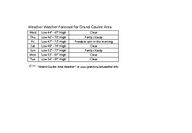
When we think of or talk about the weather, there are times when a weather crystal ball would be really valued. Now that we are moving into the traditional months of summer – June, July and August, – I would like one of those magical weather crystal balls. I wonder if Costco stocks them; probably in bulk, quantity of four! Looking over the Climate Prediction Center's (CPC) three-month prediction, here's what they are saying: "The CPC three-class summer (June-July-August) temperature outlook has... Full story
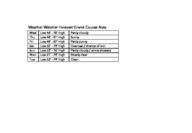
The big weather story, from my perspective, was the record-breaking snowmelt here in the Pacific Northwest. During April, western snowpack dropped at record speed, according to data from the fifth and final 2016 forecast by the U.S. Department of Agriculture's Natural Resources Conservation Service (NRCS). "In the Pacific Northwest, low precipitation and high temperatures led to a dramatic reduction in snowpack," reported NRCS. "Peak stream flow is arriving weeks earlier than normal this year."... Full story
Let’s take a look at drought here in the West. California drought conditions have changed somewhat. Unfortunately, the state is still mostly in severe drought. The exception there is the extreme northwest corner that is showing to be drought free. A number of California reservoirs are gaining a good amount of water, as well. Closer, in Oregon, the eastern and south southeastern portions are still in abnormally dry or moderate drought conditions. Here in Washington, just the extreme south central and southeastern corner of the state is s... Full story
As Washington state and the rest of the western United States continue to rebound from drought, I’ve come across a couple of interesting scientific research articles that I’m sharing here. I have two stories, one from here in the United States and the other occurring now in the Mediterranean region. First, let’s revisit the great Dust Bowl era of the 1930s. A recent study that used a reconstruction of North American drought history over the last 1,000 years found that the drought of 1934 was the driest and most widespread of the last mille... Full story
One would think with all the precipitation we had in December the drought we experienced in 2015 would be placed in the history books. Well, not just yet according to the National Drought Mitigation Center. Looks like we’ll have to see more wetness before we are officially out of drought conditions. El Niño is still in place. The National Oceanic and Atmospheric Administration is stating that it will likely be in place until at least late spring or early summer. It’s not fully clear if this particular El Niño is affecting our weather here... Full story
A recent discussion addressing earth’s Ice Age periods, the glaciation and the retreating of glaciers, brought the subject of climate change to the front. Earth scientists and geologists tell us there have been five known ice ages on earth. The last ice age ended about 12,000 years ago. Our region of Planet Earth, the Grand Coulee, was greatly affected by the last ice age. Those glacial and interglacial periods have come and gone and are, in fact, episodes of climate change. Earth’s geologic rec... Full story
Have to admit, the rain we saw in October was really refreshing. Though the rain doesn’t take us out of the drought, it is a start. The home weather station recorded precipitation at 0.85 inches. This is 0.13 inches over the mean for October, which measures in at 0.72 inches. Back in 1947, we received 2.95 inches — the all-time record. In October 1971, we had an episode of snow, a grand total of 1.3 inches. I am sure the rain was welcomed by all. Temperatures are still running on the warm sid... Full story
So many folks speak of the autumn months as one of their favorite times of the year, and I’m one of them. Temperatures are moderating from the heat of summer, and there’s a bit of a chill in the morning air as leaves begin to turn those brilliant colors. We’ll return to this subject shortly. First, let’s take a look at the month of September and see what it brought us weather-wise. As you may have predicted, we were down on precipitation. We measured just 0.17 inches of precipitation here at the home weather station, and most of it came on... Full story
The synopsis for August was not very good, a reflection of the drought affecting the Pacific Northwest. Let’s start with temperatures. Our high for the month was 102.3°F on Aug. 13, and our low was 51.7°F just 10 days later. We had three days in August that exceeded 100°F. The mean temperature for the month was 74.3°F, as compared to the overall mean of 71.9°F. That would be an increase of 2.4°F. That has been the trend this summer: hotter than normal and new records set all around the state. As we all know, we didn’t see any noticeabl... Full story
First, let’s do a recap of temperatures and precipitation for July. I recorded four days with a high in excess of 100°F. July 2, 3, 4, and 31 were all above 100°F. The high for the month was on the 3rd at 104.1°F. Our low of the month was on the 26th at 52.3°F. My data shows that just about half the month of July was 90°F or above. The home weather station recorded a mean of 78.1°F which was 5.1° above the all-time mean for the month, at 73.0°F. No records broken for July, as the all-time high was in 1939 at 113°F. Precipitation for July was ze... Full story
June was dry, indeed, and hot, too. Let’s start with a look at the temperatures first. The mean June temperature is 65.5°F, while here at the home weather station we had a mean of 74.9°F, a whopping 9.4°F increase. The all-time high temperature for June was 105°F back in 1938. I recorded two days, June 27 and 28 with highs over 107°F (107.1 and 107.9 respectively). Six new single high-temperature days were recorded at the “official” weather station for Grand Coulee for June, 8, 9 and 10 and 27,... Full story
Though our mean temperature was a bit higher for May, the month was on the normal side. We recorded a high for the month of 89.5°F and a low of 36.5°F (all-time high was 100°F in 1986 and the all-time low was 21°F in 2002). The mean was higher than the all-time mean for May (58.4°F) at 62.5°F or 4.1°F higher. May was above normal, slightly, for precipitation. We recorded 1.3 inches for the month while the mean is 1.1 inches. A little “extra” rain is always welcomed. We are a ways into June already, and a look at what is being “predicted... Full story
Certainly, California has rewritten the definition for “dry.” Yet, here in Washington (Oregon too) we are beginning to create our own heightened definition too. On the state level, Governor Inslee made more drought declarations on April 17. More than one half of the state is now listed in one of three categories, starting with abnormally dry here. The other two listings are moderate and severe drought. The Office of the Washington State Climatologist is now posting weekly state drought upd... Full story
March continued the trend of warmth we’ve been seeing the past few months, with a mean temperature of 46.6°F, 5.5°F above the March mean. It doesn’t stop there; we had a high temperature of 68.8°F on March 27, only five degrees away from the daily high of 74°F set in 1939. The low for the month here at the home weather station was 20.5°F on the March 4. All time low temperature was 0°F in 1955. Precipitation was above the mean, as well. We received 1.02 inches of rain, while the mean for the m... Full story